Highlight Reel Editing Principles for Sports and Action Footage
Strong editorial choices beat spectacular footage in sports highlight reels.

A great sports highlight reel doesn't come from picking the ten biggest plays and cutting them together with a beat drop under each one. It comes from editorial decisions about structure, pacing, rhythm, and emotional arc, the same choices a documentary editor or a narrative filmmaker makes, applied to a sport clip library instead of a script. Anyone who has scrubbed through a folder of game footage knows the temptation: grab the highlights, string them in chronological order, slap a trending track underneath, done in twenty minutes. That approach produces a reel nobody remembers by the time the next one autoplays.
The trouble with the grab-and-string method comes down to something else, exactly. It's that it skips the only question that actually matters: what story does this footage tell, and for whom? A reel built from average footage but strong editorial decisions will beat a reel of spectacular plays with no through-line, every time, because viewers don't stay for footage quality alone. They stay because something is building toward something. The decisions that follow fall into three broad areas: what gets selected, how it's paced, and how it's shaped for a specific platform and audience. This piece works through each one, then looks at how AI footage analysis tools are changing where editors actually spend their hours in 2025. The principles hold whether the reel runs 60 seconds for Instagram or ten minutes for a broadcast recap, and whether the audience is a recruiting scout or a fanbase watching Sunday night.
Selection (curating footage around a narrative intent, not a highlight count)
Selection is a rigorous, defined process rather than a highlight-reel popularity contest. It's not about ranking every clip by how loud the crowd got and keeping the top ten. The actual job is picking plays that serve a story the editor decided on before touching the timeline, and that decision changes everything downstream.
A recruiting reel built for a college scout needs footage that shows form, footwork, and decision-making under pressure, not just the outcome of the play. A scout watching a linebacker's tape cares less about the highlight tackle and more about the three steps before it: did the athlete read the play correctly, take the right angle, break down under control? A game summary reel needs a representative spread across all phases of play, not just the flashy sequences, because it's standing in for the whole match. An entertainment reel can chase pure spectacle and drama without apology. A coaching breakdown reel, oddly enough, often needs the failures as much as the successes: a blown coverage or a missed rotation teaches as much as the highlight that follows it.
That last point leads somewhere useful: contrast as a selection principle. A defensive stop earns the fast break that follows it. A near-miss earns the make. Selecting only wins, only successful plays, only the moments where everything went right, strips out the tension that makes the eventual payoff mean something. Crowd reactions, sideline reactions, a coach pacing on the touchline, a locker room moment before tip-off, these are legitimate selections too. They're not action, but they feed the emotional arc that action alone can't build.
A discipline from archival and metadata practice is worth borrowing: a smaller, well-curated clip library outperforms a sprawling, loosely tagged one. The same logic that says 200 properly labeled clips beat 2,000 inconsistent ones applies here. Log each candidate clip with a note on what it does for the story, not just what happens in the frame. That single habit, done consistently, saves more editing time later than any shortcut in the assembly phase.
Three-act structure as the skeleton of a reel that holds together
Even a 60-second reel benefits from a three-act shape. That might sound like overkill for something the length of a coffee break, but the mechanics scale down without losing their function; length changes the runtime of each act, not whether the acts exist.
Open with the single most impactful moment in the entire reel. Viewer attention gets won or lost in the first few seconds, particularly on any platform with an autoplay feed, so the hook isn't a warmup lap, it's the argument for why anyone should keep watching. Cuts here run quick, energy sits high from frame one.
Act II is the build, and this is where most amateur reels go missing. The pace slows down on purpose. Effort shows up: near-misses, defensive stops, the grind between highlight moments, maybe some B-roll of a player catching breath on the bench. This is where emotional stakes get constructed. Skip this act and the eventual payoff in Act III has nothing to push against, no weight to land with. Cuts run medium-paced here, giving the viewer room to actually feel how hard the thing being attempted really is. Contrast is the engine running underneath all of Act II: a quiet, focused shot against a wall of crowd noise, deliberate slow movement right before something explosive happens.
Act III returns to high energy. A sequence of successful plays builds toward a final image, a celebration, a buzzer-beater, a walk-off. Cuts tighten back up, music hits its peak, and the reel closes on a shot that crystallizes everything it just told. That closing frame is as much an editorial decision as the opening hook, maybe more so, since it's the last thing the viewer carries away.
None of this is a rigid formula to apply mechanically to every piece of footage. It's a repeatable skeleton, one that flexes depending on what the raw footage actually gives an editor to work with. But a reel with no narrative thread, just a sequence of plays with no build and no payoff, is the kind of thing that gets watched once and never rewatched. The three-act shape is what makes a reel stick in someone's head after the tab closes.
Pacing (how clip length, cut rhythm, and tempo control what the viewer feels)
Pacing gets misunderstood as speed. It isn't speed, it's variation, deliberate changes in clip length and cut frequency that match whatever moment the story is in.
Cut everything fast throughout and the viewer misses the actual magic in each play; everything blurs into a strobe of motion that never lands. Cut everything slow throughout and attention drops off a cliff well before the payoff arrives. Dynamic pacing means clip length shifts with the beat of the music and the tempo of the game itself, not a fixed rhythm bolted onto the whole reel regardless of what's happening on screen.
Slow motion deserves its own note here, because it's the single most abused pacing tool in sports editing. Used with restraint, it elevates a moment, telling the viewer: watch this again, closer, from inside the play. Overused, and it drains all the energy out of a reel, turning what should feel urgent into padding. It works best in Act II, extending a defining moment before the pace picks back up, or right at the close of Act III, holding on the final image a beat longer than expected.
Tension can also get built through pacing alone, independent of anything happening on screen. Increasingly rapid cuts approaching a climactic play generate anticipation before the play even resolves; the editing itself is doing the work of raising the stakes. And contrast, again, does more emotional lifting than raw action ever could: a slow, still shot of an athlete's face before an explosive sequence, a quiet locker room right before the roar of a stadium. Watch the pacing with the sound off as a practical test. If the energy arc still reads clearly without music carrying it, the pacing is doing structural work, not just riding the track underneath it.
Music (choosing and cutting to a track without letting it drive the wrong decisions)
Music sets the emotional register before a viewer has processed a single play. It's not decoration sitting on top of the edit, it's framing that tells the viewer how to feel about what they're about to see.
The track needs to match the actual energy and feel of the sport being shown, not just be popular or loud. A track that overpowers the footage pulls focus away from the action itself. A track that undercuts the energy, something too laid-back under a highlight-reel dunk, makes an explosive play feel oddly flat. Beat sync, aligning cuts and transitions to rhythmic hits in the track, is where music and pacing collapse into the same decision; a cut landing exactly on a snare hit reads as intentional in a way an off-beat cut never does.
Music also determines what kind of story a reel actually tells. The same sequence of clips, scored two different ways, reads as two different reels. One track over a montage of grinding effort plays as inspirational; a different, harder-edged track over the same footage plays as pure aggression. Auditioning several tracks against the same rough cut before locking one in is worth the extra half hour it costs. Tone follows genre loosely: high-energy hip-hop or electronic for fast-cut action reels, orchestral builds for recruiting tape or documentary-style pieces, raw crowd and game audio in place of music entirely for edits chasing realism over polish.
None of that matters if the track gets pulled without clearance. Licensed music needs permission, full stop, and dropping a popular commercial song onto a reel without licensing creates real copyright exposure. Platforms routinely detect unlicensed audio after upload, which can result in a reel being muted or removed after the work of editing is already finished. Royalty-free libraries, platform-licensed audio, original composition, or simply leaning on game and crowd audio as the primary sound bed all sidestep the problem before it starts.
Platform context changes every editorial decision after the first cut
A reel built for YouTube will not necessarily work on TikTok, and the reverse holds just as true. Platform isn't something to think about after the edit is locked, it's a variable that should shape decisions from the first cut onward.
YouTube sports audiences expect depth. Full game highlight packages tend to run considerably longer than short-form content, and standalone analysis content often runs longer still. Because the platform's algorithm rewards total watch time, pacing has to sustain attention across a longer arc, which means more room for replays, analysis overlays, and a slower narrative build than a short-form platform would tolerate. Structured uploads with clear chapters, a strong thumbnail, and a consistent posting cadence outperform one-off drops. Graphics matter too: lower thirds and score overlays that match broadcast conventions read as more credible to a YouTube sports audience than something thrown together in a rush.
Short-form platforms flip nearly every one of those assumptions. TikTok and Instagram Reels demand ultra-quick cuts and a hook in the opening moments, no slow build allowed. Vertical framing, 9:16, needs to be accounted for in the crop or composition, not bolted on as an afterthought. Captions and text overlays carry real narrative weight here too, since sound-off is the default viewing mode for a large share of that audience.
Athlete recruiting reels sit in their own category. The audience is a single scout or coach, watching on a laptop, frequently with the sound off, evaluating technique and decision-making rather than looking for entertainment. Pacing can slow down here in ways a TikTok edit never could, slow motion earns a legitimate place in showing footwork or form, and the reel's whole purpose shifts from holding attention to demonstrating skill clearly enough for someone to make a personnel decision off it.
The practical upshot: decide on the primary platform before editing starts, because aspect ratio, clip length, pacing, and even what counts as a key moment worth including all depend on where the reel is headed. Exporting multiple platform-specific versions from one master edit is standard practice now, but the editorial choices behind each version aren't identical just because the source footage is.
How AI footage analysis changes where editorial time gets spent
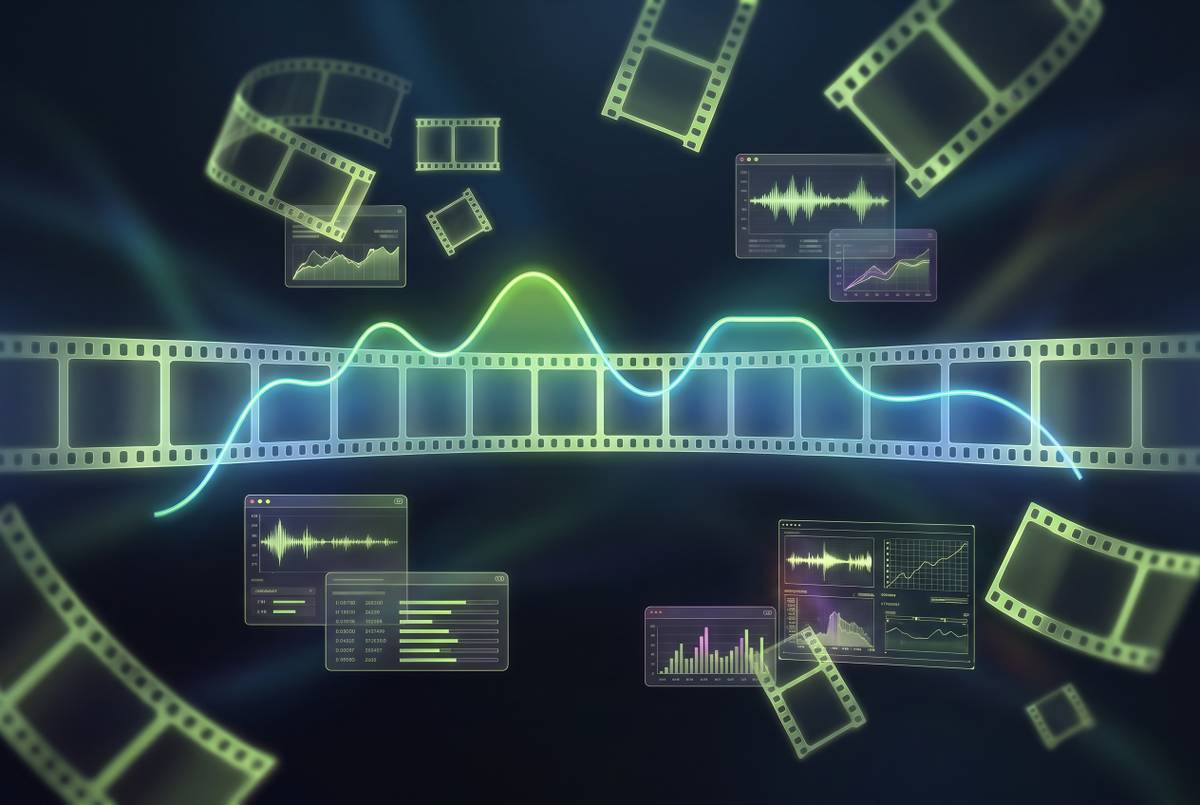
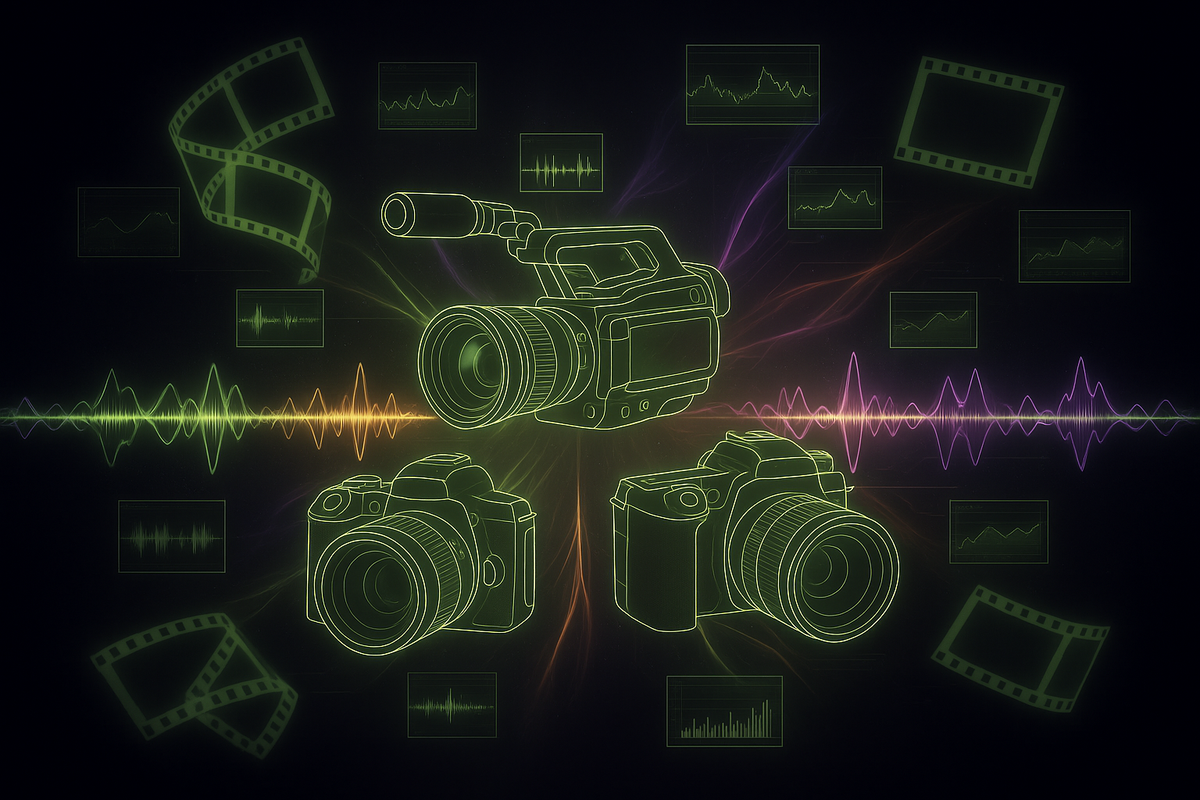
Ask most sports editors where the actual hours go and the answer usually points somewhere other than cutting. It's finding, scrubbing through hours of raw, multi-camera footage hunting for the handful of moments worth building a reel around. Research on remote editorial workflows has put time lost to hunting for files and footage at around 25% of a working day, and in sports, where one game can generate hours of footage across several camera angles, that number compounds fast.
AI footage analysis attacks that specific bottleneck. Action recognition systems can flag sport-specific events, a goal, a dunk, a blocked shot, a tackle, a near-miss, without an editor manually scrubbing a four-hour timeline looking for them. Sport-specific models matter here, since a soccer-trained system looks for goals, saves, and near-misses, a basketball model flags dunks, blocks, and clutch shots down the stretch, and a football model catches touchdowns, big hits, and momentum-swinging plays. Each sport gets detection tuned to what actually counts as a moment in that game. Metadata tagging runs alongside detection, timestamps, player identifiers, event types, all indexed and searchable across an entire archive instead of buried in unlabeled footage. Some systems go further into contextual editing, picking out the strongest replay angle for a given moment rather than just flagging that the moment happened.
What comes out of that process is a structured first pass, a set of flagged candidate clips, not a finished editorial judgment. That distinction matters. The decisions covered in the sections above, which clips actually serve the story, how they get ordered to build an arc, how they get paced to land emotionally, stay human decisions. AI accelerates the gathering, not the storytelling reasoning behind what gets kept. Industry figures from 2025 put the time savings from AI-assisted tools at around 14 hours per video project, and in a highlights workflow, most of that recovered time comes from cutting down detection and logging, not from skipping craft.
Some of these tools now layer in AI-generated commentary voiceover, synced narration that follows the action in real time, giving a clip the polish of a broadcast package even for a team with no access to an actual commentator.
AI-assisted tools editors are using for sports and action footage in 2025
Two broad categories of tool are doing the heavy lifting right now: AI-native highlight generators that handle everything from detection through export, and traditional professional editing software with AI features built into specific tasks.
On the AI-native side, Vidio.ai runs on a prompt-box workflow: an editor types out what the reel needs to do, and the system assembles a first cut, with support for beat sync, adjustable segment length, automatic B-roll search, caption overlays, and resizing for both 9:16 and 16:9 delivery. Its free tier caps uploads at 3GB, and the platform claims a processing baseline around 0.8 seconds. Revid.ai built a dedicated AI Sports Highlights Generator that scans footage for goals, big plays, and significant sequences, then layers in AI commentary voiceover synced to the action through text-to-speech. It exports across 9:16 for TikTok and Reels, 16:9 for YouTube, and the standard ratios suited to major platforms, supports resolution up to 4K, and runs on a credit system where a standard video generation starts around 15 credits. Athlete AI, a mobile-first app for iOS and Android, does sport-specific play detection across basketball, football, soccer, baseball, volleyball, tennis, lacrosse, and several others, and adds sport-specific play detection and automatic reel generation for sharing to social platforms on top of the auto-generated reels. As of March 2025 it was 3.5 out of 5 stars across 65 App Store ratings, with users flagging some algorithm limitations that the developers are still working through. OpusClip handles automated highlight extraction aimed at social-first clipping, and Runway offers prompt-driven generation with localized edit controls for footage that needs more granular adjustment.
On the professional NLE side, Adobe Premiere Pro's Text-Based Editing lets an editor assemble a rough cut from a transcript, and Rotobrush 2 in After Effects uses AI-powered edge detection to handle complex masking work that used to eat hours of manual roto. DaVinci Resolve's Neural Engine drives AI-assisted color grading, spatial noise reduction through its UltraNR tool, and motion estimation for smoother retiming. Descript takes a transcript-centric approach to editing and overdub, which suits sports content built around interviews or commentary tracks as much as pure action footage.
A separate category consists of AI-powered footage analysis platforms built to export directly into Premiere Pro, DaVinci Resolve, and Final Cut Pro rather than replacing them, tools that read camera motion, pacing, emotional tone, and audio continuity, then hand back structured metadata and a clean first cut an editor can pick up inside their existing timeline, with collaboration features built for teams working asynchronously across time zones.
Choosing between these comes down to where in the workflow an editor sits. AI-native tools suit anyone needing fast turnaround from raw footage straight to a shareable clip. NLE-integrated AI suits editors doing polished long-form or broadcast-quality work where the professional timeline remains the final delivery environment. The strongest results tend to combine both: AI handling detection and a rough first cut on the front end, human editorial judgment finishing the job in a professional NLE on the back end, applying every principle covered above, selection, structure, pacing, music, and platform, to footage that's already been sorted for it.
Sources
- Athlete AI: Sports Reel Editor App - App Store
- AI Highlight Video Editor
- AI Sports Highlights Video Generator | Auto Voiceover & Subtitles
- AI in Sports Videography: Automated Highlight Detection and Editing
- gudsho.com
- How to make a sports highlight reel: recruiting & social
- How To Edit Sports Videos: Simple Guide For Dynamic Cuts
- iconik.io